


Can I Travel While Waiting for My Citizenship Interview?
After you file your N-400, it takes several months before USCIS schedules your interview. Many people wonder if they can travel during the wait, and whether a trip will cause a problem for their case.
Good news: Yes, you can travel. Your rights as a green card holder stay the same until you take the oath of citizenship, but there are a few practical things to consider about the timing of your trips to avoid complicating your naturalization case.
Quick answer
Yes, you can travel internationally while your N-400 is pending. Your green card stays valid until the day of your oath, so re-entry works the same as it did before you filed. While you're gone, have someone check your mail so you don't miss an important notice from USCIS. You will need to be available in-person for the biometrics appointment, the citizenship interview, and the oath ceremony. Avoid long trips, as continuous residence keeps applying through your oath ceremony. Physical presence is set at filing under the statute — but some USCIS officers have counted post-filing travel anyway, so if you filed close to the minimum, be careful.
At a glance:
- Your green card and all its travel privileges stay valid through the wait.
- If your green card expires while you're waiting, filing the N-400 automatically extended it by 24 months. Carry your receipt notice with your card.
- USCIS mails biometrics and interview notices typically 4–6 weeks in advance.
- A trip of 6+ months during the wait raises continuous-residence questions; trips under 6 months are routinely fine.
- Update USCIS if your address changes (Form AR-11). AR-11 is for actual moves, not temporary travel.
Prefer to watch? Anjana and Robby walk through the main points of this guide in this video.
Your Green Card and Travel Privileges Stay Valid During the Wait
Filing the N-400 doesn't change your status. From the day you file until the day you take the oath, you are still a lawful permanent resident with the same rights you had before. You can travel internationally, work, and re-enter the U.S. with a valid green card and passport. The N-400 application is a separate process running on top of your existing status, not a pause on it. Your green card stays in effect until your oath ceremony, at which point it's retired because you've become a U.S. citizen.
What If Your Green Card Expires?
It's very common for a green card to expire in the middle of the wait. If that happens to you, don't worry.
Filing your N-400 automatically extended your green card by 24 months. There's no form to file, no fee to pay, and nothing to request. Just add two years to the original expiration date printed on your card. All you have to do is carry the letter USCIS sent you when they received your application. This is called a Receipt Notice (Form I-797C), and the extension is stated on it — look for the paragraph about your Permanent Resident Card. If you can't find your copy, you can print one from your USCIS online account.
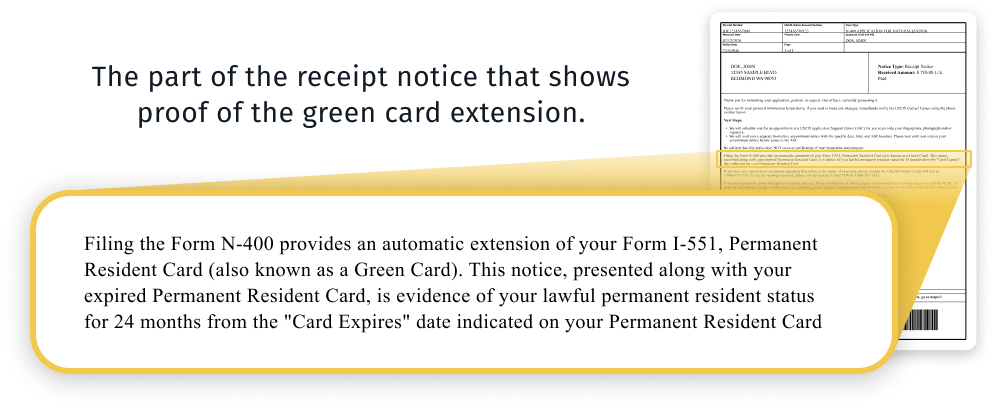
When you travel, carry the receipt notice and your green card together, with your passport. Hand both to the officer when you re-enter the U.S. Customs sees this combination regularly and knows exactly what it is. Airline check-in systems may flag an expired card, so keep the notice within reach at the counter too.
Our guide on renewing your green card versus applying for citizenship has more details about the extensions, and when you still need to apply for a new card, like when your card is lost, stolen, or more than 24 months expired.
What USCIS Will Send You During the Wait, and What to Do If You're Away
The real risk with traveling during the wait is missing something USCIS sends you while you're gone — and there are two things to watch for.
An appointment you have to attend
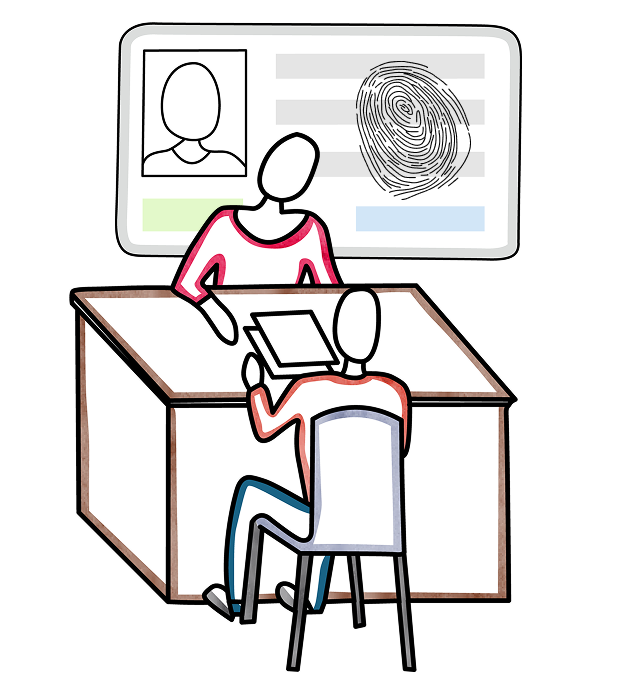
USCIS will schedule a biometrics appointment (a short fingerprinting and photo visit) in the first weeks after you file, and your citizenship interview some months later. Both notices are mailed to the address on your N-400, typically with 4–6 weeks of advance notice. If you're abroad when one of these arrives, you may need to change your travel plans to be back for the appointment. Missing one without rescheduling can stall or close your case.

A notice that asks you to do something on a deadline
USCIS may send a Request for Evidence (RFE) or a similar notice asking you to provide more information by a specific date. You may need to send documents from your home, employer, bank, or doctor — all of which is harder when you're out of the country. Submitting a good response by the deadline will be difficult to do from abroad.
A few simple precautions or steps cover most situations:
- Ask someone you trust to collect your mail during the trip and tell you what arrives.
- Check your USCIS online account at least weekly while you're gone. Notices post there too, and you can turn on email and text alerts.
- If an appointment falls on a date you can't make, or asks for evidence you can't pull together from abroad, you can request a reschedule or an extension (see the reschedule section below). Rescheduling will slow down your case, so use this as a last resort.
Planning your trips around most likely appointment times
Your biometrics appointment will be scheduled shortly after you apply, so it's a good idea not to make travel plans for the period of 3-8 weeks after applying. The citizenship interview itself is harder to plan around. The wait time depends on your field office. Current ranges are published in the USCIS processing times tool.
How Continuous Residence and Physical Presence Apply During the Wait
Two USCIS eligibility rules can come up when you travel during the wait: continuous residence and physical presence. Our continuous residence and physical presence guide is the full reference for the rules themselves; this section is just about how each one works between applying and taking the citizenship oath.
Continuous residence has to be maintained through the oath ceremony.
After a single trip of 6 months or more, USCIS will assume that your continuous residence has been broken (and you will have to provide evidence that it wasn't); a trip of 1 year or more without a re-entry permit is treated as a break, with limited exceptions. This rule runs from before you file all the way through your oath, including the gap between the interview and the oath. A 7-month trip taken after a successful interview can still cause a problem.
Physical presence is measured at the time you file.
You need to have been physically present in the U.S. for at least half of the qualifying period (30 months out of 5 years for most applicants, 18 months out of 3 years if you're married to a U.S. citizen) as of the date USCIS receives your N-400.
Important gray area: The regulations state that trips taken after filing don't reduce that calculation. But in practice, some USCIS officers have factored in post-filing travel when looking at physical presence anyway, and the application of this has been inconsistent across offices.
If you filed comfortably above the physical-presence minimum, short trips of a week or two usually won't cause a problem. If you filed at or near the minimum, be careful about travel during the wait even though the statute says those trips shouldn't count against you.
If you're helping a parent plan a longer trip, our guide on long trips abroad for parents covers the same territory from the parent angle.
For more information about all the eligibility rules, read our guide on when you can apply for citizenship.
Travel Between the Interview and the Oath Ceremony
A lot of applicants believe their case is done at the interview. It isn't. You're still a green card holder until your oath ceremony, which USCIS schedules separately after the interview. The wait for the oath varies by field office. During that gap:
- You can still travel. Your green card is valid and your travel privileges are unchanged.
- You want to be available for the oath notice. The oath notice (Form N-445) comes by mail, like the biometrics and interview notices, so you'll want to be reachable.
- Missing your oath ceremony has consequences. USCIS will usually reschedule it once or twice, but chronic missed oath ceremonies can lead to your case being closed. The oath is the moment your citizenship becomes official.
A note on same-day oaths: at some field offices, applicants used to take the oath the same day as the interview and walk out as citizens. That practice hasn't been happening at any field office we're aware of for the past several months, so plan on a separate oath ceremony scheduled by mail.
When to Be Careful
Most travel during the wait is routine. The cases worth thinking twice about:
- Trips of 6+ months. Continuous residence runs through the oath ceremony, so any 6+ month trip between filing and oath surfaces as a CR question, including a trip after you've already passed the interview. The trip can still be workable, but it's the kind of case where attorney advice before you leave can help clarify your next steps.
- You filed close to the physical-presence minimum. Per the statute, trips after filing don't reduce your physical presence. But because some officers have factored in post-filing travel anyway, applicants who filed near the 30-months-out-of-5-years (or 18-months-out-of-3-years) line are smart to be cautious about long trips during the wait.
- Travel patterns or destinations that trigger additional Customs & Border Patrol (CBP) questioning. A small share of green card holders face extra questioning at re-entry because of where they're traveling or how often. Our guide on your rights at re-entry as a green card holder covers what to bring and how to handle the border.
- Being away when the interview notice arrives. USCIS will reschedule once on a documented good-cause request, but a reschedule slows your case down. Plan trips with this in mind as you get closer to your typical interview window.
- An actual change of address during the wait. If you move (a real change of residence, not a trip), file Form AR-11 within 10 days. AR-11 isn't required just because you're traveling; for travel without a change of residence, the mail-collection plan above is enough.
If your situation crosses one of these lines, particularly the 6+ month trip case, it's a good idea to talk to an immigration attorney before you go.
What If You Need to Reschedule a USCIS Appointment?
Rescheduling slows your case, often weeks to months, depending on your field office's load. If you can make the original appointment, make it.
USCIS does allow reschedules for documented good-cause reasons: illness, family emergency, work obligation, prior travel commitment with non-refundable bookings. You can submit a request through your USCIS online account or by following the instructions on the appointment notice. Don't request a reschedule without documentation, especially for an interview, and don't assume a missed reschedule is recoverable. A pattern of missed appointments can lead USCIS to close your case as abandoned.
A Quick Pre-Trip Checklist
The week before any trip between submitting your application and taking the oath:
- ✅ Check your USCIS online account for any new notices.
- ✅ Confirm the address on file is current. File Form AR-11 if you've moved.
- ✅ Check your green card's expiration date. If it's expired or expiring soon, that's fine. Your citizenship application extends your green card by 24 months but you'll need to bring your receipt notice along with your card.
- ✅ Confirm your passport is unexpired and not nearing expiration.
- ✅ Bring proof-of-residence documents in case of secondary inspection on re-entry. Our green card travel rights guide has the list.
- ✅ Set up a plan for someone to collect your mail and check your USCIS account during the trip.
- ✅ If the trip is 6+ months, talk to an immigration attorney before you leave.
What This Means for You — Two Examples

Maya — A Routine Trip
Maya filed her N-400 in early March and has a 12-day trip to Manila in late May for a friend's wedding. Her biometrics notice arrives in mid-March and she has the appointment well before the trip. Her green card expires two months before her interview, but her N-400 receipt notice already extended it, so she clips the notice to her passport and packs both. She filed well above the physical-presence minimum. She asks her sister to check her mail and her USCIS account while she's gone. Her interview is still months away. Maya has no problems with this trip.

Daniel — A Trip Worth Thinking Through
Daniel filed his N-400 in February. In May, he learns mother is in the hospital and he needs to go be with her in Lagos for the next 8 months. He can re-enter on his green card afterward, but a trip that long raises a continuous-residence question. It's worth running by an immigration attorney before he leaves—especially if his physical-presence numbers were close to the minimum when he filed. He plans to document the reason (caregiving for a parent) and keep evidence that he maintained his U.S. apartment, tax filings, and ties while abroad.
Are You Ready To Start Your Citizenship Application?
Clearbox turns your N-400 into simple, guided steps you can finish at your own pace. Get started in minutes.
Get Started